




Saturday morning at your local parkrun brings the same familiar dilemma. You want music to carry you through the tough kilometres, but you still need to hear a volunteer calling splits, a runner behind you saying “on your right,” or a cyclist ringing a bell on a shared path. Standard in-ear buds can seal you off from everything, creating a risky little bubble when the course gets crowded and narrow.
This isn’t another generic roundup. We’re looking at running headphones that solve the motivation-versus-awareness problem without forcing you to choose one or the other. We’ll focus on what truly matters for Australian parkruns, coastal paths, and busy weekend running routes: open-ear comfort, secure fit, and audio that doesn’t drown out your surroundings. If you’re shopping for the best headphones for running, these are the practical details that actually hold up once you’re moving.
Part 1. Understanding headphone etiquette at parkrun
Parkrun has a strong community feel — people look out for each other. Getting the balance right between your music and staying alert helps keep everyone safe and the vibe friendly, whether you’re chasing a PB or just enjoying the morning with a pack of locals.
1. Parkrun’s approach to headphones
Parkrun events generally don’t ban headphones outright, but safety comes first. Personal audio is fine as long as you can still hear volunteers, other runners, and anything happening around you. Some locations may be stricter depending on the course layout and local conditions (tight trails, crossings, shared paths).
At the end of the day, it’s personal responsibility rather than a hard rule — but the message is clear: don’t become a hazard. If your volume is so loud you miss a safety call, that’s the wrong setup for a shared event.
2. Balancing music focus with the social side
One of the best parts of a Saturday morning run is the encouragement that gets exchanged. A quick “nice work!” from a regular, or a volunteer cheering you through the final stretch, adds something a playlist can’t replace.
Being social doesn’t mean ditching music entirely. If you’re choosing gear for busy routes, it helps to understand what makes the best sports earphones for running — so you can keep the motivation while still staying connected to what’s going on around you. You don’t need silence; you just need to avoid disappearing into your own world.
3. Why hearing volunteers matters
Volunteers are effectively your extra set of eyes and ears on the course. They’re the ones spotting loose gravel, a tight bottleneck, an oncoming bike, or a dog walker around the next bend. Missing those calls increases risk for everyone, not just you.
If your ears are blocked, you’re running blind. You either hesitate at turns, or you push through without noticing hazards because you’re locked into the beat. One person staying aware helps the whole field flow better — and that starts with being able to hear what’s happening ahead.

Part 2. Why open-ear earbuds are the smart choice
Traditional in-ear buds often create the same problem at parkrun: either you crank your music and tune out the world, or you leave one earbud out and ruin the sound. Open-ear tech finally removes that compromise.
1. Maintaining situational awareness
Because open-ear earbuds sit outside the ear canal, you stay connected to the rhythm of the pack around you. You’ll hear when the group ahead bunches up, pick up footsteps of someone about to overtake, and notice changes in the environment — without constantly looking over your shoulder.
On tight, twisty courses, that awareness is a genuine advantage. If you can anticipate a bottleneck near a narrow gate or sharp corner, you can adjust your line early and keep things smoother for everyone. You’re running with people, not just near them.
2. Making it easier to communicate with volunteers
Volunteers give up their Saturday mornings to make these events happen. A quick “thank you” when you grab your token, or acknowledging someone’s encouragement, is part of what makes parkrun feel like a community run instead of a solo time trial.
Small gestures matter — and heavily sealed earbuds tend to make those interactions awkward at best.
3. Eliminating the occlusion effect
There’s nothing worse than the loud “thump” of your own footsteps or the echo of your breathing that can happen with traditional in-ears. It’s distracting, especially when you’re pushing and your breathing gets rough.
Open-ear designs reduce that internal echo dramatically. You can get through the toughest kilometres without every breath sounding amplified and laboured — even when you’ve still got plenty left in the tank.
Part 3. Key features to look for in parkrun running headphones
When you’re shopping for running headphones, it helps to ignore the marketing fluff and focus on what actually holds up on a busy Saturday morning 5k. Some specs look impressive on paper but don’t matter when you’re halfway up a rise; others are genuine deal-breakers if you want a smooth, stress-free run.
1. Secure fit and stability
Parkrun courses aren’t always “perfect track” conditions. You might be on compact gravel, uneven footpaths, tight corners, and a crowded start where people naturally bunch up. Your headphones need to stay put — no bouncing, no slipping, no constant readjusting.
Look for wraparound designs or adjustable hooks that spread pressure across your head instead of digging into one spot. The best options feel stable without creating hot spots ten minutes in — that comfort-plus-security combo is what separates the best sports earphones for running from the ones that end up in your pocket mid-run.
2. Water and sweat resistance
You don’t need dramatic weather for moisture to matter. Even on a clear morning, pushing for a PB means sweat is guaranteed — and plenty of runners still train in light rain.
Check the IP rating to see what the headphones can actually handle. A solid rating means you can run hard without worrying about crackling audio or the gear cutting out halfway through the session.
3. Battery that matches weekly routine
For a single 5k you don’t need massive battery life, but having a buffer makes life easier. If your headphones run 8–10 hours, you can usually get through a week of training without constantly thinking about charging.
Quick charge is a big bonus. Being able to top up enough battery for a full run while you’re getting ready is exactly the kind of convenience that makes you stick with your kit.
4. Controls you can use while moving
Touch controls can be annoying when you’re breathing hard and your hands are sweaty. Moisture can cause mis-taps, and hunting for a tiny sensor without looking is tough when you’re focused on pace.
Physical buttons are often the better choice. You build muscle memory quickly, so you can skip tracks or adjust volume without breaking rhythm — which is what you want when you’re working.
Part 4. Our top picks: best headphones for running at parkrun
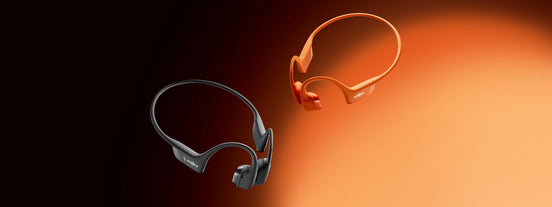
Not every “sports” earbud survives the reality of a crowded, sweaty Saturday 5k. After testing different setups, these two Shokz models consistently come out on top for parkrun-style running — especially if you want awareness as well as sound.
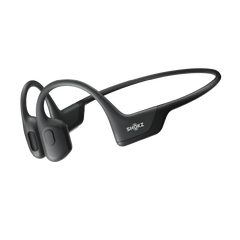
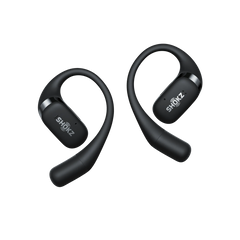
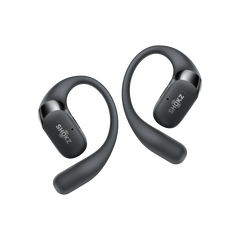
1. Shokz OpenFit Pro: premium comfort meets versatility
The Shokz OpenFit Pro is a great pick if you want high-quality audio without losing awareness of what’s around you. At just 12.3 g per earbud, it’s light enough that you’ll forget it’s there. DirectPitch™ helps keep sound focused towards your ears, so your playlist stays personal — not something everyone around you has to hear.
Sound performance
- Shokz SuperBoost™ with Dolby Atmos optimisation for more immersive audio than many open-ear designs
- Active Open-Ear Noise Reduction so your audio stays clearer when you need it
- AI-enhanced triple-mic array for clearer calls while you’re on the move
Physical design
- Ultra-soft Silicone™ 2.0 for comfortable contact points over longer wear
- Hybrid optical + capacitive sensors adapt to different ear shapes, auto-play when worn, and pause when removed
- Up to 60 hours total battery with the case, plus a 10-minute quick charge for around 4 hours of listening
Practical benefits
- Physical multifunction buttons that still work with sweaty fingers
- IP55 water and sweat resistance for training in wet conditions and heavy sweat
- Bluetooth 6.1 with multipoint pairing so you can switch between phone and watch smoothly
If you’re chasing best headphones for running that balance sound quality with open-ear awareness, the OpenFit Pro is a strong all-rounder.
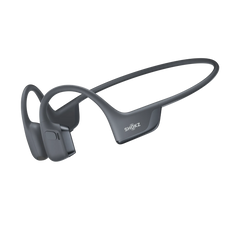
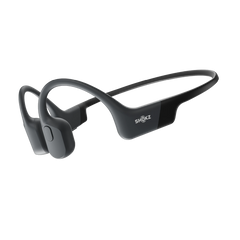
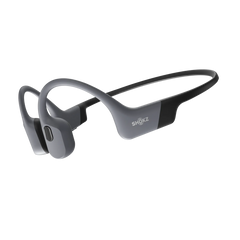
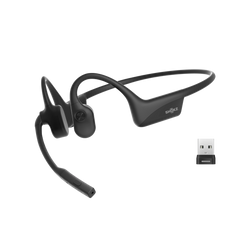
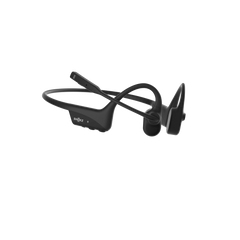
2. Shokz OpenRun Pro 2: purpose-built for endurance
The Shokz OpenRun Pro 2 takes a different approach, using bone conduction as the main technology. The wraparound frame sits securely without ear hooks, and the 30.3 g weight is spread evenly so it feels stable over long sessions.
Core technology
- Dual drivers: bone conduction for clear vocals plus air-conduction speakers for stronger bass
- 10th-generation bone conduction delivers cleaner sound than earlier versions
- Reduced vibration compared to previous models for better comfort over time
Durability features
- Nickel-titanium memory alloy frame flexes repeatedly without losing shape
- IP55 protection, matching the OpenFit Pro for sweat and wet-weather sessions
- 12-hour battery life — plenty for multiple runs per charge
Runner-focused details
- Two noise-reducing mics for clearer calls, even when it’s windy
- Standard and Mini sizes to suit different head shapes
- Bluetooth 5.3 for stable connection throughout the run
If you want maximum stability and a “set-and-forget” feel, the OpenRun Pro 2 is a standout. It’s especially good for runners who dislike in-ear designs but still want reliable running headphones that stay secure and keep them aware.
Part 5. Quick tips for your next Saturday 5k
A little prep makes parkrun feel smoother from the first kilometre to the finish token. It’s usually the small things — especially how you handle your gear — that stop you becoming “that runner” who blocks the path or misses an important call.
1. Set a safe, balanced volume
Keep your volume under 60%. It’s enough to keep the rhythm and motivation going, but you’ll still hear volunteers, a faster runner calling to pass, or a bike bell on shared paths.
Don’t wait until you’re standing at the start to fiddle with your phone. Test it at home or during your warm-up. If you can’t hear someone talking to you over your music, it’s too loud for a shared event. You want to be switched on, not sealed off.
2. Start-line etiquette
The start is always crowded. With a big group packed into a narrow space, it’s smart to keep your music paused until you’ve actually crossed the timing mats and the field begins to spread out.
The last thing you want is to miss a last-minute safety update or course note because you’re locked into your playlist. Once the pack thins out, settle into your rhythm and then bring the volume up a touch if you need to.
3. Test your gear in training
Make this a rule: never wear brand-new running headphones for the first time at parkrun. That’s how you end up spending your morning adjusting fit, dealing with pressure points, or realising the battery won’t last.
Use a midweek run to check how they feel after the 20-minute mark. Plenty of earphones feel fine for five minutes, then start slipping once you sweat. Sort those issues during training so Saturday is simple and enjoyable.

Final thoughts
At the end of the day, your Saturday 5k should be about running, not fussing with your kit. The goal is simple: find running headphones that stay out of the way. You want the motivational lift from your playlist without becoming the runner who’s oblivious to volunteers or the pack around them.
The old trade-offs don’t really apply anymore. Whether you go for the sleek Shokz OpenFit Pro or the endurance-focused OpenRun Pro 2, you can get solid sound without the isolating “bubble” of traditional in-ears. For regular 5k runners, it’s a straightforward upgrade — keep the soundtrack, stay aware, and enjoy the run.
Frequently Asked Questions
1. Why are open-ear models considered the best headphones for running?
The main reason is simple: your ear canal stays open. That means outside sound can reach your eardrum naturally, without being dampened by silicone tips. On a busy parkrun course, that “open” design keeps you connected to what’s happening around you.
The Shokz OpenRun Pro 2 achieves this through bone conduction, sending vibrations through the temporal bone so you can hear your audio while still keeping the natural background sound of the event.
2. Can I still hear volunteers and other runners with open-ear headphones?
Yes. Because your ear canal isn’t blocked, external sounds — like instructions, footsteps, and warnings — come through much more naturally. There’s no physical seal that muffles what’s happening around you.
That means you don’t need to constantly pause your audio or keep adjusting volume just to stay aware.
3. What volume is safe for outdoor running?
A common guideline for shared environments is 60% volume or below. At that level, your music is less likely to mask higher-frequency cues such as a bike bell or someone calling out behind you. It’s a good balance between motivation and safety.
4. How do I stop headphones slipping when I sweat?
Stability is usually better when it comes from external support rather than relying on friction inside the ear canal. Wraparound frames or silicone-coated hooks use your ear cartilage and the back of your head as anchor points.
Those materials also stay grippy as you sweat, helping prevent movement during the up-and-down impact of a 5k run.
5. Are open-ear earbuds OK in light rain?
It depends on the specific IP rating. As a practical benchmark, IPX5 is a strong level for running — it’s designed to handle water jets from different angles, which comfortably covers light rain and heavy sweat.
That protection helps seal internal components from moisture and salty sweat, reducing the risk of crackling audio or short-circuit issues that can happen with less-protected earbuds during harder efforts.