






Your ears ache by mid-afternoon. Or you've missed someone calling your name because your earbuds blocked out everything, including them. Or you've just heard the term "open-ear headphones" somewhere and want to know whether they're genuinely different from the in-ear or over-ear headphones you already own, or just a marketing spin on the same idea. If any of that sounds familiar, this is for you.
Open-ear headphones aren't a variation on your current earbuds. They work on a fundamentally different principle. Here's what that actually means, in practical terms, and how to know which type suits you better.
How They're Actually Different
There are three distinct designs at play, and each one solves the "sound in your ear" problem in a different way.
Open-Ear
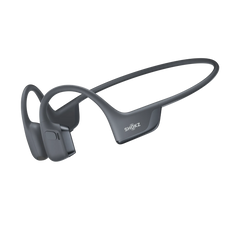
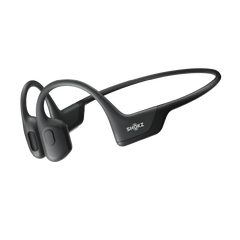
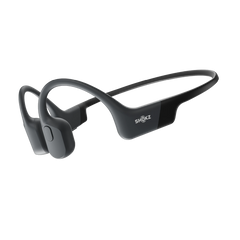
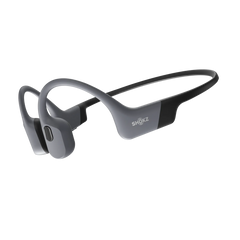
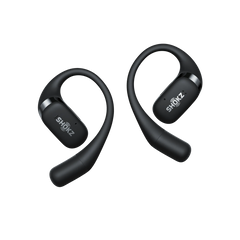
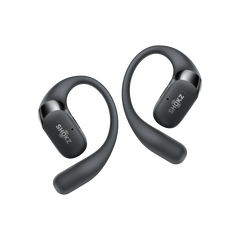
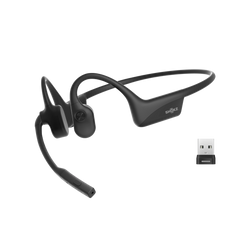
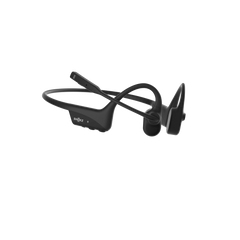
Open-ear headphones leave your ear canal completely open, on purpose. Sound reaches you through the air just outside your ear, or, with bone conduction designs, through gentle vibrations carried via your cheekbones, bypassing your eardrum altogether. Nothing sits inside your ear canal, and nothing presses against it.

In-Ear
In-ear headphones (including earbuds and stemmed designs) use a silicone or foam tip that sits inside the ear canal, creating a tight seal. That seal is what gives in-ear headphones their compact size, their strong passive isolation, and their punchy, contained bass, because the sealed space acts like a tiny sound chamber right against your eardrum.
Over-Ear
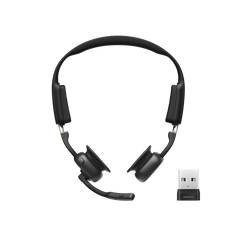
Over-ear headphones use cushioned earcups that fully enclose the ear, sealing around it rather than inside it. That larger sealed space is what allows over-ear designs to fit bigger drivers, deliver the deepest bass and most immersive soundstage of the three, and, in many models, add active noise cancellation on top of the passive seal.
Here's how that plays out at a glance. This summer, we partnered with NielsenIQ on a global whitepaper — surveying more than 5,000 consumers across the US, UK, France, Germany, Japan and South Korea, and several of the figures below come from that research. Each percentage reflects the share of that headphone type's owners who ranked the factor as their single most important consideration, whether that's a comfort priority or their overall top purchase driver.
¹ Share of each headphone type's owners who named this as a top reason they value that type, from the same 2026 Shokz x NielsenIQ survey.
² Share of each headphone type's buyers who ranked this as the single most important factor in their most recent purchase, out of several factors offered.
What You Gain, and Lose, With Each Type
What Open-Ear Gives You
The most immediate difference is comfort over long wear. Without anything sealed inside or over your ear, there's no build-up of pressure, no soreness after a few hours, and nothing trapping heat and sweat against your skin. As the table above shows, being lightweight and non-pressuring is the top comfort priority for open-ear users, cited by 51%, followed by easy to operate (47%), stable to wear (35%) and not causing sweating (35%).

The second gain is awareness. Because your ear canal stays open, you can hear a colleague, traffic, or a kettle boiling without pausing your music. 41% of open-ear users specifically value staying aware of ambient sounds, and 36% value being able to stay socially connected while listening, both notably higher than for sealed headphone types.

What you trade for this is isolation and outright bass depth, which the two sealed types below still generally win on.
What In-Ear Gives You
In-ear headphones remain the most compact, pocketable option of the three, and their sealed fit delivers strong bass and reasonable isolation without much bulk. That's a big part of why sound quality remains the top purchase factor for 26% of in-ear buyers, closely followed by price and promotions.
The trade-off shows up over time rather than at the point of purchase. A seal that fits well when you first put it in can start to feel unstable or uncomfortable hours later, and heat or sweat can build up inside the ear canal during exercise or on a warm commute.
What Over-Ear Gives You
Over-ear headphones give up portability entirely in exchange for the best sound and isolation of the three. Larger drivers, deeper bass, and, in many models, genuinely effective active noise cancellation make them the clear choice when focused, immersive listening is the priority, which lines up with the data: sound quality is the top purchase factor for 27% of over-ear buyers, well ahead of anything else.
What you give up is comfort at length. Cushioned earcups can start to feel heavy and warm over a full workday, and there's nowhere for heat to escape.
Why People Actually Switch
Specs only tell part of the story. It's just as useful to hear why people who've already made the switch actually did it.
Among people who switched from over-ear to open-ear, a common complaint is that they were simply too heavy and tiring to wear for long stretches, alongside a general desire to try a different type altogether. Among people switching away from in-ear headphones, overheating and sweating during use shows up repeatedly as a reason to move on, often alongside the seal not fitting securely. In both cases, it's rarely about sound quality. It's about what the headphones felt like after an hour or two, which tracks closely with why comfort is the priority open-ear users mention most.
Which One Is Right for You?
There's no universally "better" option here, only a better fit for how you actually use headphones. If you're wearing them for hours at a time, want to stay aware of what's going on around you, or have simply never found sealed headphones comfortable, open-ear is worth trying. If you want something compact and pocketable for the gym or a quick commute, in-ear is hard to beat on convenience. If isolation and maximum bass are what you're after, whether that's blocking out a noisy office or getting the most immersive listening experience possible, over-ear headphones are still the better tool for that specific job.
Most people don't need to choose permanently. But if discomfort has been the thing quietly putting you off wearing headphones for long periods, that's exactly the problem open-ear headphones were built to solve. It's also the problem we've spent over a decade focused on at Shokz, from bone conduction designs built for sport to lighter, all-day earbuds for the office and everyday life. If you're curious what that actually feels like, our range is a good place to start.