






- Ear Hook Earbuds vs Over-Ear Headphones at a Glance
- What Are Ear-Hook Earbuds?
- What Are Over-Ear Headphones?
- Which Is More Comfortable?
- Which Is More Practical?
- Which Is Better for Exercise?
- What About Environmental Awareness?
- Which Is Better for Long Listening Sessions?
- What About Calls and Working?
- Ear Hook vs Over-Ear Headphones: Which Is Right for You?
- Best Shokz Headphones for Different Lifestyles
- The Verdict: Choose the Headphones That Fit Your Life
- FAQs
Choosing headphones used to be fairly simple. You either bought a pair of earbuds that slipped into your ears or went for a larger pair of headphones that sat over them.
Today, there are a lot more options. Ear-hook earbuds are designed to stay firmly in place, while open-ear models let you listen without sealing your ear canals. Over-ear headphones, meanwhile, remain a popular choice for immersive listening and noise cancellation.
So, when it comes to ear hook earbuds vs. over-ear headphones, which design makes the most sense?
The answer depends on how you actually use your headphones. A runner, daily commuter and someone who spends hours watching films at home can have very different priorities.
Most listeners end up choosing between three main options:
- Traditional ear-hook earbuds that plug into your ear canal.
- Classic over-ear headphones that cover your entire ear.
- Open-ear earbuds that hook over your ear without blocking the ear canal.
Ear Hook Earbuds vs Over-Ear Headphones at a Glance
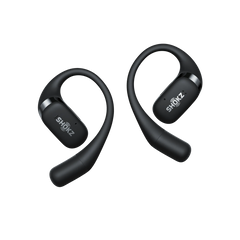
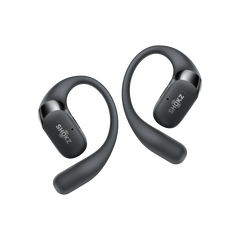
There is one important detail to keep in mind: an ear hook does not automatically mean an open-ear design. Some ear-hook earbuds use traditional in-ear tips that seal the ear canal. Others, including Shokz OpenFit models, use an open-ear approach.
That difference can have a big impact on how and where you use them.
What Are Ear-Hook Earbuds?
A secure fit can make all the difference when you're moving. Ear-hook earbuds use a small hook that wraps around the outside of the ear, helping to keep them in place as you walk, run, or exercise.
They're particularly appealing if you:
- Run or train regularly
- Don't like earbuds working their way loose
- Want a compact alternative to headphones
- Spend a lot of time outdoors
- Prefer headphones without a headband
A good example is the Beats Powerbeats Pro 2, which uses flexible ear hooks, in-ear tips, ANC and Transparency mode, and is designed specifically around exercise.
There's a catch, though. The hook helps keep the earbuds secure, but it doesn't necessarily mean you can hear your surroundings naturally. With a conventional in-ear design, you're still placing a speaker and ear tip in the ear canal.
What Are Over-Ear Headphones?
Over-ear headphones surround your ears with cushioned earcups, creating a more immersive listening experience. They're a popular choice for music, films, travel and working at a desk, particularly when active noise cancellation is a priority.
Sony's WH-1000XM5, for example, is a closed over-ear headphone with active noise cancellation and up to 30 hours of battery life with noise-cancelling switched on.
Over-ear headphones can be particularly appealing when you want to shut out distractions. On a long flight, for example, the combination of comfortable earcups and noise cancellation can make a noisy cabin much easier to tolerate.
The trade-off is size. They're heavier and bulkier than most earbuds, and your ears can become warm during extended use.
Which Is More Comfortable?
Comfort is surprisingly personal.
Some people love the cushioned feel of over-ear headphones. Others don't like the sensation of having their ears covered for hours at a time.
Ear-hook earbuds take a different approach. There's no headband across your head and, with an open-ear design, nothing needs to sit inside your ear canal. OpenFit 2+, for example, weighs 9.4g per earbud and uses a flexible ear hook designed to provide a secure fit while remaining comfortable for extended wear.
Over-ear headphones can still win for long periods of inactive listening.
The real question is which type of contact you find more comfortable.
Which Is More Practical?
When you're travelling light, smaller usually wins.
Ear-hook earbuds can disappear into a charging case and slip easily into a pocket or small section of a backpack. That's useful when you're heading to work, going for a walk or moving between different parts of your day.
Over-ear headphones aren't difficult to travel with, but they take up more room. A case can also add noticeable bulk to your luggage.
This matters if you're commuting by public transport. A pair of compact earbuds can be put away quickly when you arrive at the station or office.
If you're heading onto a plane for several hours, however, the larger size of over-ear headphones may be a worthwhile trade-off for the immersive listening experience.
Which Is Better for Exercise?
Movement changes the equation.
Ear hooks have a practical advantage because they provide an additional point of stability around your ear. That's why they're popular among runners and gym-goers.
The Powerbeats Pro 2 is a good example of a traditional ear-hook design built for exercise, with sweat- and water-resistance, secure-fit hooks, and workout-focused features.
Over-ear headphones can work for walking, stretching or light gym sessions, but they're generally less convenient for vigorous exercise. They can move around, heat up and become uncomfortable when you're sweating heavily.
Open-ear headphones take another approach. OpenFit 2+ combines an ear hook with an open-ear design and IP55 water resistance, making it ideal for workouts and outdoor activities.
What About Environmental Awareness?
Sometimes, hearing your surroundings matters just as much as hearing your music.
This is probably the most significant practical difference between open-ear earbuds and headphones.
When you’re out walking your dog, running along a shared path or heading through a busy city street. You’ll want to listen to a podcast without completely disconnecting from what's happening around you.
Traditional in-ear earbuds and over-ear ANC headphones are designed to reduce external sound.
Not always what you want outside. If you are:
- Running near roads
- Cycling or scooting
- Walking the dog
- Commuting by bike
- Working from home and need to hear the kids or a knock at the door
Open-ear audio leaves the ear canal open, allowing you to remain more connected to your surroundings while listening. OpenFit 2+ uses DirectPitch 2.0 technology to direct sound towards your ears while maintaining its open-ear design.
OpenFit Pro takes the concept further with Shokz Open-Ear Noise Reduction, designed to improve listening clarity in noisier environments without abandoning the open-ear format.
Which Is Better for Long Listening Sessions?
Long listening is where personal preference really comes into play.
If you're settling in for a film, listening to an album or spending hours working at a desk, over-ear headphones can be an excellent choice. Their cushioned earcups and strong isolation create an immersive environment.
But not everyone wants that feeling of being enclosed.
Open-ear headphones can be a better fit if you want music or podcasts in the background while staying aware of your surroundings. That's useful at home, in the office or when you're moving between different tasks.
OpenFit Pro offers up to 12 hours of listening from the earbuds with noise reduction disabled and up to 50 hours with the charging case. OpenFit 2+ offers up to 11 hours from the earbuds and up to 48 hours with the charging case.
What About Calls and Working?
Your headphones aren't just for music anymore.
Ear-hook and open-ear buds are handy when you:
- Take calls while walking or commuting
- Move from room to room
- Need to stay aware of what is happening around you
- Jump between a chat and your music
Over-ears are often better when you:
- Are in a really noisy spot
- Have long conference calls
- Want that full isolation to focus
OpenFit Pro uses a triple-microphone system with AI voice recognition and wind-control technology for calls, while OpenFit 2+ uses four beamforming microphones with AI-powered noise reduction. Both also support multipoint pairing, allowing you to connect to two devices.
If your working day involves frequent conversations with colleagues, however, being able to hear someone beside you without removing your headphones can be a real advantage.
Ear Hook vs Over-Ear Headphones: Which Is Right for You?
Best way to decide is to match it to your weekly lifestyle.
Choose ear-hook earbuds if you:
- Exercise regularly
- Need a secure fit
- Want something compact
- Spend lots of time outdoors
- Prefer not to wear a headband
Choose over-ear headphones if you:
- Prioritise immersive sound
- Travel frequently
- Want strong noise cancellation
- Spend long periods listening at a desk
- Prefer greater isolation from outside noise
Consider open-ear headphones if you:
- Walk, run or exercise outdoors
- Want to remain aware of your surroundings
- Don't enjoy in-ear pressure
- Move between work and conversations
- Want audio without feeling completely disconnected
This is where Shokz offers a particularly interesting alternative. Rather than choosing between small earbuds and large over-ear headphones, you can consider an open-ear design that combines a lightweight, secure fit with greater environmental awareness.
Best Shokz Headphones for Different Lifestyles
If open-ear audio sounds like the right fit for your lifestyle, two Shokz models are worth considering.
OpenFit Pro: Best for premium everyday listening
OpenFit Pro is the flagship option for listeners who want a more advanced open-ear experience without giving up comfort or awareness.
It features Shokz SuperBoost, Open-Ear Noise Reduction, AI-enhanced calls, IP55 water and dust resistance, multipoint pairing and up to 50 hours of total playback. It also supports wireless charging.
It's a strong choice if you want one pair of open-ear headphones to use for commuting, work, exercise, and relaxation.


OpenFit 2+: Best for comfort and everyday versatility
OpenFit 2+ offers another approach, combining a lightweight ear-hook design with DualBoost technology, Dolby Audio, physical controls and up to 48 hours of total listening time. It weighs 9.4g per earbud and has an IP55 water-resistance rating.
It's particularly well-suited to people who want open-ear comfort for everyday listening, outdoor activities, work, and exercise.


The choice between them isn't simply about which one is "better". It's about which set of features matters most to you.
The Verdict: Choose the Headphones That Fit Your Life
The best headphones aren't necessarily the biggest, lightest or most expensive pair.
They're the ones that fit naturally into your day.
Ear-hook earbuds make sense when stability, exercise and portability matter most. Over-ear headphones are hard to beat when you want immersive listening, isolation and a comfortable experience while travelling or relaxing.
And open-ear headphones offer another option for people who want to listen while staying connected to the world around them.
If that sounds like the way you prefer to listen, explore the Shokz OpenFit range to compare your options.