






Why Are So Many Runners and Swimmers Switching to Bone Conduction?
Picture this: you're out on your usual morning run, dodging traffic, keeping half an ear out for your training partner, and trying to enjoy your playlist all at once. Or maybe you're doing laps at the pool, wishing you could listen to a podcast without your earbuds getting waterlogged or falling out mid-stroke.
If either of those sounds familiar, you've probably come across bone conduction headphones and wondered exactly how they manage to play music without sitting in or over your ears at all. It seems almost like a magic trick — sound, somehow, without going anywhere near your ear canal.
It's not magic. It's physics, and it's actually been around for longer than you'd think. In this guide, we'll break down exactly how bone conduction headphones work, how they stack up against your regular earbuds or over-ear cans, and how we've engineered our own bone conduction technology here at Shokz to solve some of the category's trickiest historical drawbacks — including which of our models is worth considering depending on whether you're training on land or in the water.
So, What Actually Is Bone Conduction?
To understand bone conduction, it helps to think about how you normally hear anything at all.
With regular hearing — and with regular headphones — sound travels through the air, enters your ear canal, and causes your eardrum to vibrate. Those vibrations get passed along to the inner ear (the cochlea), which converts them into signals your brain reads as sound.
Bone conduction skips the middle step entirely. Instead of sound waves travelling through the air and rattling your eardrum, small transducers send gentle vibrations directly through your cheekbones and skull, straight to the cochlea. Your eardrum barely gets involved.

Here's the part that surprises most people: this isn't some brand-new invention dreamt up for sports headphones. Bone conduction has been used in hearing aids for decades, and there are stories of Beethoven — as his hearing declined — using a rod clenched between his teeth and touching his piano to "hear" the vibrations of the notes he played. Different setup, same underlying principle: sound reaching the inner ear without ever passing through the air and the eardrum.
How Do Bone Conduction Headphones Actually Work, Step by Step?
Once you understand the science, the mechanics of the headphones themselves are pretty straightforward. Here's what's happening every time you pop on a pair and hit play:
- Placement matters. The transducers sit gently on your cheekbones, just in front of your ears — not inside them, and not over them.
- Signal becomes vibration. The headphones convert your audio (music, calls, podcasts) into tiny, precise vibrations.
- Vibrations travel through bone. Those vibrations pass through your cheekbones and skull directly to the cochlea in your inner ear.
- Your brain does the rest. The cochlea reads these vibrations the same way it reads any other sound signal, and your brain interprets them as music or speech — while your ear canal stays completely open and unblocked the entire time.
That last point is really the whole reason people fall in love with bone conduction in the first place. You get your audio and you stay fully tuned in to the world around you — footsteps, traffic, a lifeguard's whistle, or your training buddy calling out from behind.
Bone Conduction vs Traditional Headphones: What's Actually Different?
If you're used to in-ear buds or over-ear headphones, switching to bone conduction feels like a genuinely different category of product — not just a different shape. Here's how they compare:
| Bone Conduction |
Traditional |
|
| Sound path | Vibrations through the cheekbone to the cochlea | Sound waves through the air to the eardrum |
| Ear canal | Completely open | Blocked or covered |
| Situational awareness | High — you hear traffic, people, alarms | Reduced, especially with noise cancelling on |
| Comfort for long wear | No in-ear pressure or irritation | Can feel uncomfortable after hours of wear |
| Hearing aid compatibility | Can generally be worn alongside hearing aids | Often conflicts with hearing aids |
| Bass and sound leakage | Historically weaker, with more leakage on early models | Typically stronger and more contained |
That last row is worth sitting with for a second, because it's the honest trade-off bone conduction has always had to work through. Early bone conduction headphones had a reputation for thin-sounding audio and noticeable vibration, simply because bone doesn't transmit low frequencies as efficiently as air does. It's a real limitation of the physics — and it's exactly the problem we've spent years engineering our way around.
How Shokz Have Engineered Bone Conduction to Actually Sound Good
Knowing the theory behind bone conduction is one thing. Making it sound genuinely enjoyable — with real bass, minimal vibration, and reduced sound leakage — is a different challenge altogether. When we first started developing this category, there were no benchmarks to follow. Over more than 20 years of research, we've built up a growing family of bone conduction acoustic technologies, each one solving a different piece of the puzzle: better sound quality, less leakage, less vibration, and lower power consumption.
Here's a look at the core technologies behind that work.
DualPitch™ — Two Drivers, Working Together

Rather than relying on bone conduction alone, DualPitch™ uses two independent drivers, each tuned for a specific job:
- The bone conduction driver handles mid-to-high frequencies with precision, keeping instrumentals and vocals crystal clear.
- The air conduction driver takes care of the bass, producing a richer, more textured low end with minimal vibration.
By splitting the workload this way, DualPitch™ directly tackles the "thin sound" problem bone conduction has historically been known for, giving you a more balanced, immersive listening experience without losing the open-ear design that makes the category worth choosing in the first place.
TurboPitch™ — Built for Deeper Bass

TurboPitch™ takes a different approach to the bass question. It integrates what we call a "CoreCushion" into the low-frequency vibration system — a concept inspired by the diaphragm found in traditional speakers, which plays a key role in punchy, powerful bass. The result is a redefined way for low frequencies to resonate through open-ear audio, aimed squarely at delivering more powerful, satisfying bass.
PremiumPitch™ — Our Original Bone Conduction Platform, Refined Over Time

PremiumPitch™ represents the earlier stages of our bone conduction development, refined across several generations:
- PremiumPitch™ 1.0 to 1.0+ — Structural optimisation of the bone conduction transducer expanded the frequency response range, improving overall sound quality.
- PremiumPitch™ 2.0 — An integrated sound system that houses all components in a single enclosure, delivering more balanced, detailed sound with reduced leakage and enhanced waterproof performance.
- PremiumPitch™ 2.0+ — The transducer is adjusted to a 30° angle, which significantly reduces vibration for a noticeably more comfortable, immersive listening experience
Comfort That Lasts
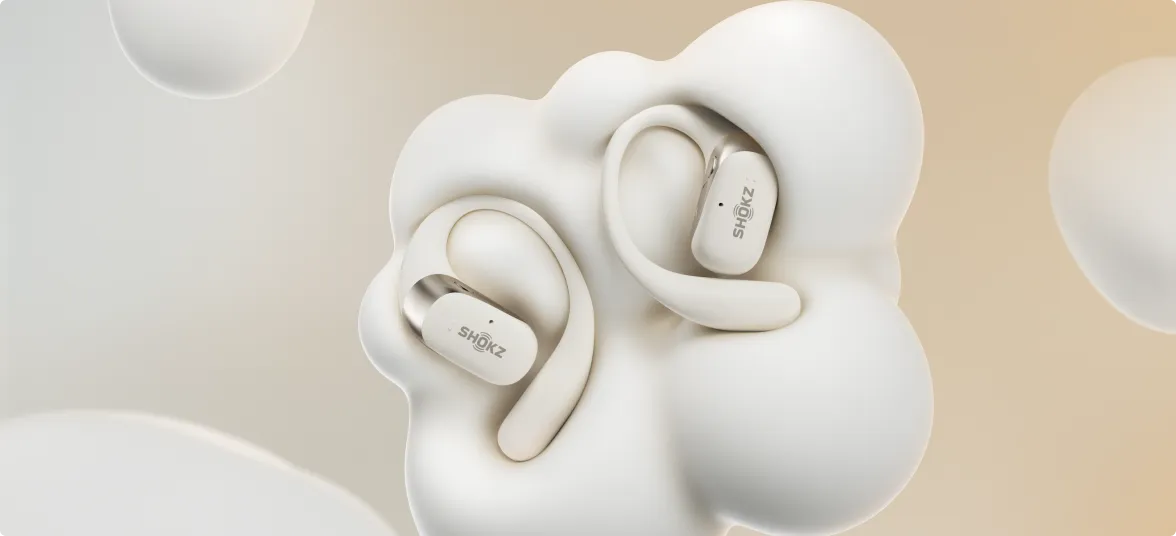
None of this matters much if the headphones aren't comfortable enough to actually wear through a session. Across our range, we use ergonomic ear hooks and stable frame designs, paired with materials like nickel-titanium alloy, engineered to give you secure, all-day comfort without feeling like it's squeezing your head.
Our Bone Conduction Headphones for Every Session
Once you understand the tech, the next question is naturally: which pair actually suits how you train? Here are two of our models, built for two very different environments.
OpenRun Pro 2 — For Running, Cycling and Everyday Training
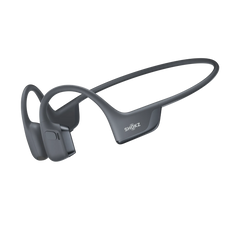
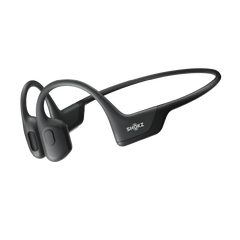
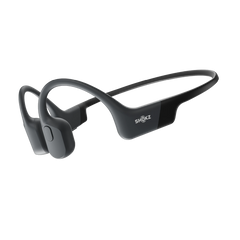
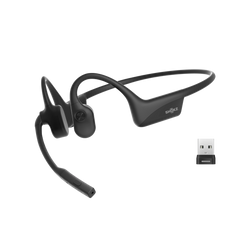
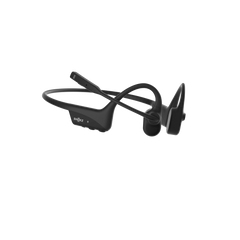
If most of your movement happens on land — footpaths, trails, the gym, or your commute — the OpenRun Pro 2 is our flagship pick. It's built around DualPitch™ Technology, so you get that fuller sound with proper bass rather than the thin, tinny audio bone conduction used to be known for.
For anyone who wants to stay fully aware of traffic and their surroundings while still getting genuinely enjoyable sound, this is the model we built for exactly that.


OpenSwim Pro — For Swimming and Water-Based Training
Swimming brings a completely different set of demands, and it's where bone conduction really earns its keep. There's no fighting with waterlogged earbuds or worrying about a wired connection getting tangled in the pool — the transducers sit on your cheekbones, your ears stay open (useful for hearing a coach or lifeguard), and the whole unit is built to handle being submerged.
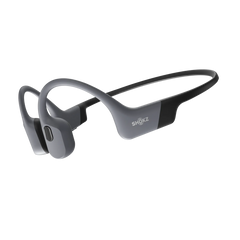
The OpenSwim Proruns on our PremiumPitch™ 2.0+, our 8th-generation bone conduction technology, designed to reduce vibration and sound leakage while improving audio quality compared with the 7th-generation tech we used in the original OpenSwim.
If your training involves any real time in the water, this is the model we designed around that reality — not just water-resistant as an afterthought, but built for it from the ground up.


Ready to Hear the Difference for Yourself?
Bone conduction isn't just a novelty — it's a genuinely different way of listening, one that keeps you connected to the world around you while you train, commute, or swim laps. And while the technology has always had real trade-offs to work through, particularly around bass and vibration, that's exactly what we've spent our engineering effort solving with technologies like DualPitch™ and PremiumPitch™.
Whether you're chasing kilometres on the road or laps in the pool, we've built a model around how you actually train.
Explore the OpenRun Pro 2 and OpenSwim Pro on our website to find the pair that fits your next session — and hear what open-ear listening is really like.