






- Why Do Headphones Feel Uncomfortable With Glasses?
- Which Headphone Designs Work Best With Glasses?
- How Does Your Type of Glasses Affect Comfort?
- What to Look for When Choosing Headphones for Glasses
- Shokz Options Worth Considering
- So, Which Headphones Are Best for Glasses Wearers?
- FAQs
Wearing glasses and headphones together might seem straightforward.
Sometimes it is.
Other times, after 20 minutes of listening, your glasses dig into the side of your head, and you’re constantly shifting your headphones to get comfortable again.
The problem isn't necessarily your glasses or your headphones. It's how the two fit together. Your glasses sit around your ears and across your temples, and your headphones add pressure in the same places.
If you’re exercising, on a long commute, or listening for several hours, this can quickly lead to discomfort.
Some headphone designs work better with glasses than others. Once you understand how they fit, it's much easier to work out which earbuds for glasses wearers might suit you.
Why Do Headphones Feel Uncomfortable With Glasses?
Comfort comes down to where everything contacts your head and ears.
Over-ear headphones, for example, can press the ear cushions against your glasses arms. Thicker frames make this more noticeable, while tight headphone clamping can push the glasses firmly against your temples.
Then there's the space competition.
Your glasses already sit around your ears. Add an ear cup, ear hook, or clip, and you have another piece of hardware trying to occupy the same area.
Four common issues are worth considering:
- Pressure against the temples
- Pressure around the ears
- Limited space around glasses frames
- Movement during exercise or everyday activity
That's why comfort isn't simply about soft padding or lightweight materials. It's about how the headphone design interacts with your glasses.
Which Headphone Designs Work Best With Glasses?
No single answer works for every glasses wearer. Different designs solve different problems.
Over-Ear Headphones
Over-ear headphones are popular for a reason. Large ear cups can feel comfortable for long listening sessions, and the cushioning keeps the headphones from sitting directly inside your ears.
For glasses wearers, though, the fit can be more complicated.
The ear cushions have to seal around your ears, so they press against your glasses arms. If you have thick frames, larger sunglasses or a wraparound style, that pressure can increase.
Over-ear headphones can still work well with glasses if your frames are thin and the headphones fit comfortably. They’ll be less appealing if pressure around your temples is already a problem.
In-Ear Earbuds
In-ear earbuds take a different approach. Because they sit inside the ear canal, they don't need a headband or large ear cups around your glasses.
That can be a big advantage.
They usually have less direct contact with your glasses arms, making them a practical option for people who regularly switch between prescription glasses and sunglasses.
The catch is that another comfort issue can replace the glasses problem. Some people find in-ear tips irritating after several hours, while others simply don't like the plugged-in feeling.
So, yes, earbuds can work for glasses wearers. But comfort still comes down to personal preference and fit.
Ear-Hook Earbuds
Ear-hook earbuds are popular with runners and active users because the hook helps keep the earbuds in place.
Instead of relying entirely on the earbud itself, the hook wraps around the outside of your ear. That extra support can be useful when you're active.
For glasses wearers, there's a bit more to think about.
The big advantage is that there's no traditional headband and no large ear cup pressing against your temples. Depending on the design, it can eliminate a major source of discomfort.
The downside is that the hook also occupies space around your ear.
That matters if your glasses have thick arms or you wear larger sports glasses. You want the glasses and the headphone hook to sit together without pushing against each other.
For some people, ear hook earbuds for glasses are an excellent combination. For others, it comes down to getting the right fit.
Clip-On and Open-Ear Earbuds
Clip-on earbuds and other open-ear designs approach comfort differently.
Rather than sealing the ear canal like traditional in-ear earbuds, open-ear products sit outside the ear and direct sound towards the ears. This can be appealing if you dislike ear tips or want to stay connected to your surroundings.
For glasses wearers, the main advantage is less pressure inside the ear and less need for a conventional headband.
Make sure the earbud or clip sits comfortably alongside your glasses arms without creating a pressure point.
They're a good option for commuters, walkers, runners, and people who want to hear what's happening around them while they listen.
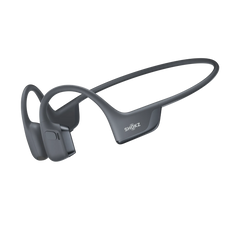
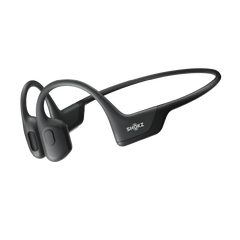
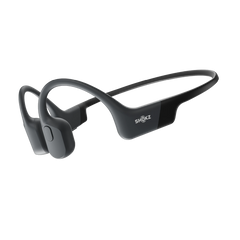
Shokz's open-ear range is designed around this combination of awareness, comfort and everyday use.
Other Open-Ear Designs
Open-ear headphones come in various shapes and designs.
Some use an ear hook. Others use a clip or a design that sits behind the ear. Some are built mainly for sport, while others are designed for everyday listening.
So instead of asking whether open-ear headphones work with glasses, look at where the headphones contact your head and ears.
That gives you a much better idea of whether the two are likely to work together.
How Does Your Type of Glasses Affect Comfort?
Your glasses can make just as much difference as the headphones you choose.
| Glasses type | What to consider |
| Prescription glasses | Look at temple pressure and frame thickness |
| Thick frames | Ear cups may press more noticeably against the frame |
| Thin frames | Often easier to combine with different headphone designs |
| Sunglasses | Larger frames can create more competition for space |
| Sports glasses | Stability becomes especially important during movement |
| Wraparound glasses | May be more difficult to combine with large over-ear headphones |
No headphones are universally best for glasses because the right combination depends on your frame shape, your ears, and how you intend to use the headphones.
What to Look for When Choosing Headphones for Glasses
Finding headphones that don't hurt with glasses starts with looking beyond the headline specifications.
1. Where does the headphone make contact?
Check whether it sits over the ear, inside it, around it or alongside it.
2. How much pressure does it create?
Padding is helpful, but it isn't everything. A tight clamp can still be uncomfortable even when the ear cushions are soft.
3. Does it compete with your glasses?
Look at where your glasses arms sit before deciding which design is likely to work.
4. How stable is it?
If you run, train, or walk frequently, headphones that keep moving can become frustrating quickly.
5. How does it feel after an hour?
A pair can feel fine for ten minutes and become uncomfortable after a longer listening session. Long-term comfort deserves more attention than first impressions.
6. Do you need to hear what's around you?
For running, commuting and outdoor activities, open-ear designs can offer an alternative to headphones that create a more enclosed listening experience. Shokz positions its open-ear headphones around maintaining situational awareness while listening.
7. Will you wear different types of glasses?
If you switch between prescription glasses, sunglasses, and sports eyewear, think about how well the headphones work with all three.
Shokz Options Worth Considering
Shokz's open-ear approach gives glasses wearers another option to traditional over-ear and in-ear headphones.
OpenFit Pro
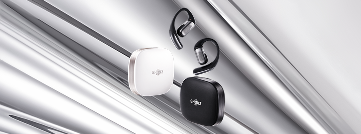
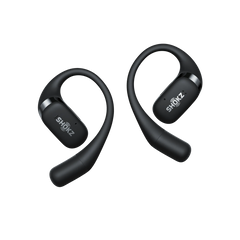
The OpenFit Pro combines an open-ear design with an ear-hook construction, giving you a secure fit without a traditional headband or large over-ear cups. It is designed for fitness, work, leisure and outdoor use, focusing on comfort and stability.
That makes it worth considering if glasses and conventional headphones tend to compete for space around your head.
OpenFit Pro also includes open-ear noise reduction, designed to improve clarity while retaining the open-ear listening experience.


OpenFit 2+
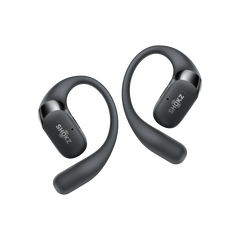
The OpenFit 2+ is another ear-hook, open-ear option designed for people who want comfort without sealing the ears. Shokz specifically describes it as a design that works with glasses, and its open-ear construction is intended to provide a comfortable, secure fit.
It's built for everyday life, outdoor activities, and gym sessions, making it a flexible choice for people who move between work, commuting, and exercise. The earbuds weigh 9.4g each and use Shokz Ultra-Soft Silicone 2.0, while the charging case provides up to 48 hours of listening time.
The choice between OpenFit Pro and OpenFit 2+ ultimately comes down to what matters most to you, including sound, comfort, features, activity and how you plan to use your headphones.


So, Which Headphones Are Best for Glasses Wearers?
The best choice depends on where you experience discomfort.
| Design | Glasses compatibility | Long-session comfort | Exercise | Main consideration |
| Over-ear | Variable | Good | Variable | Can press against glasses arms |
| In-ear | Generally good | Variable | Good | Ear-tip comfort |
| Ear-hook | Variable to good | Good | Very good | Hook and frame share space |
| Clip-on/open-ear | Variable to good | Good | Good | Position alongside frames |
| Other open-ear | Design dependent | Good | Good | Individual fit matters |
If over-ear headphones are pressing your glasses into your temples, changing the design is the simplest answer.
If you dislike having earbuds inside your ears, an open-ear model is worth giving a go
And if you spend a lot of time running, walking or commuting, stability and situational awareness matter just as much as sound quality.
The best headphones are ultimately the ones you can forget you're wearing.
That's especially true if you wear glasses.