






If you've spent any time browsing headphones lately, you've probably noticed a new shape showing up next to the usual in-ear and over-ear options: open-ear. Instead of sealing your ear canal, these headphones sit just outside or near your ear — and they've quickly become one of the most talked-about categories in personal audio. If you're wondering what they actually are, how they differ from what you already own, and whether they're worth trying, this guide covers everything in one place.
What Are Open-Ear Headphones?
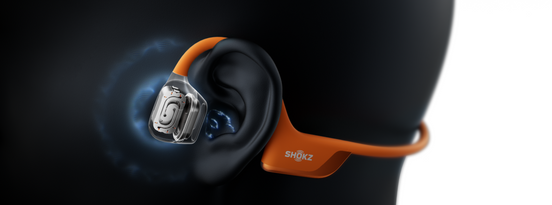
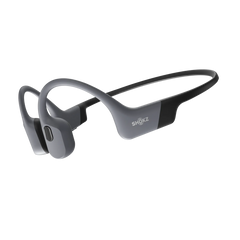
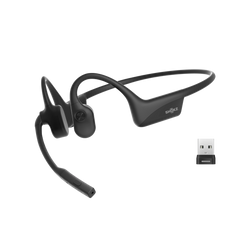
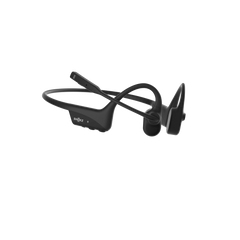
Open-ear headphones are designed to leave your ear canal completely open, rather than sealing it shut the way most headphones do. Instead of pushing sound directly into your ear, they deliver audio through the air just outside it, or — with bone conduction models — through gentle vibrations carried via your cheekbones, bypassing the eardrum entirely.

That's a different starting point from the two headphone types you already know:
-
In-ear headphones (stemmed earbuds and bean-shaped buds alike) create a sealed fit inside the canal for isolation and deep bass.
-
Over-ear/on-ear headphones use cushioned earcups that sit over or on the ear, damping out the world around you.
Open-ear headphones don't try to isolate you from your surroundings. They're built to work alongside them.
The Three Types of Open-Ear Headphones
Open-ear isn't one single design — it covers three distinct approaches, each suited to slightly different habits.
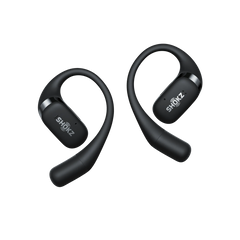
Clip-On Earbuds attach to the outer ear without entering the canal at all. They're the most versatile of the three: Shokz and NielsenIQ's joint whitepaper data¹ shows ear-clip designs have the broadest spread of daily use — sporting (46%), commuting (41%) and public places (32%). This broad spread of scenarios makes clip-on designs particularly versatile for everyday use.


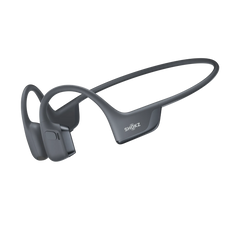
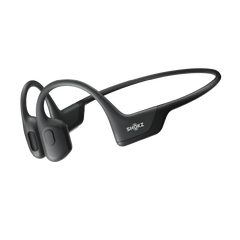
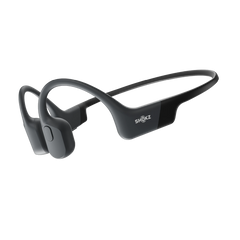
Bone conduction headphones send sound through vibration rather than air, leaving the ear canal completely free. They're the specialist of the group: 54% of use happens during sport — the highest sport-usage share of any open-ear type — thanks to a design that pairs naturally with helmets, caps and swim goggles.
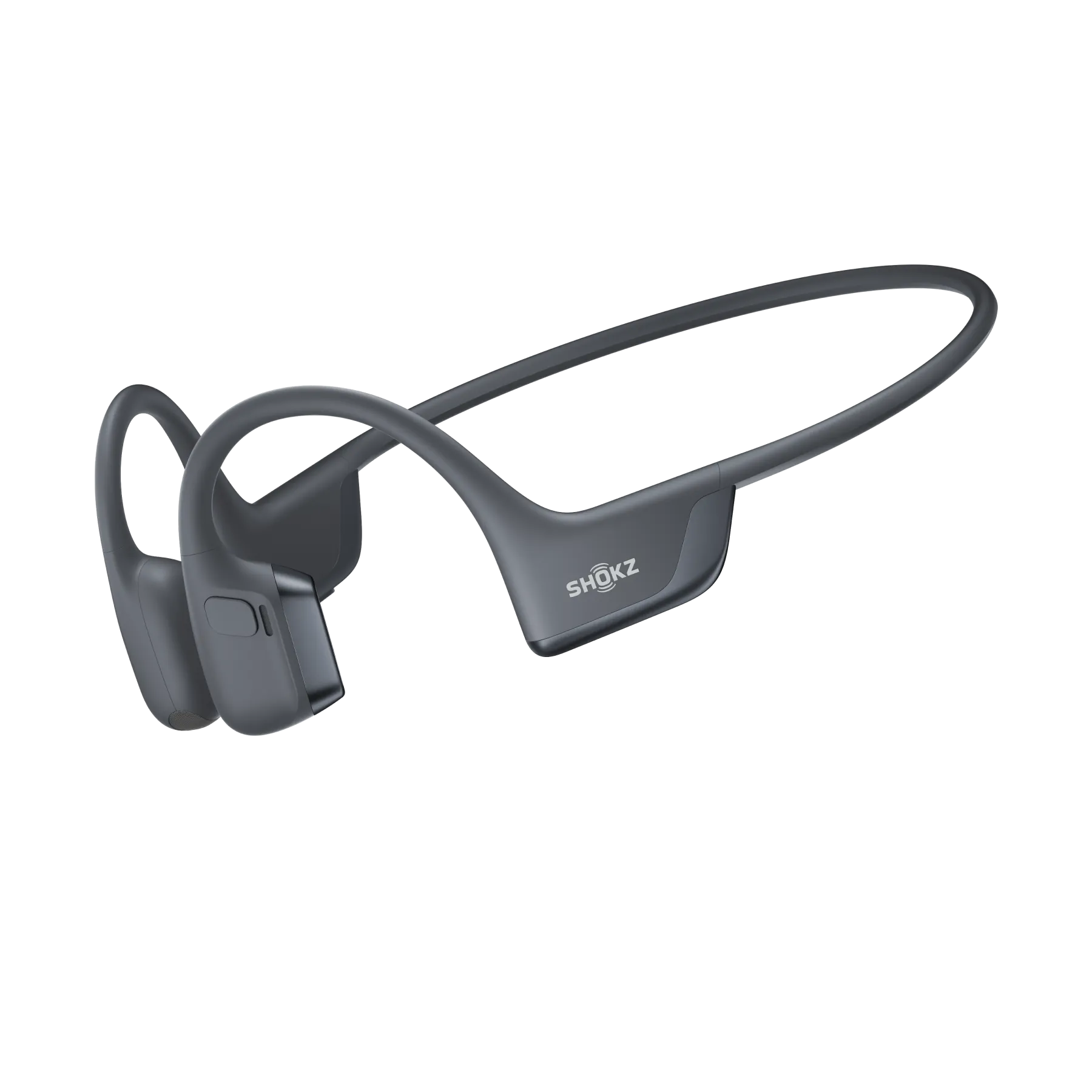

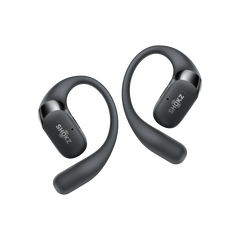
Ear-Hook Earbuds wrap securely around the ear for extra stability, sitting between the other two in how they're used, with a fairly even split across sporting (46%), commuting (44%) and public places (38%). A solid all-rounder if you want security without going fully clip-on.


¹ From a 2026 whitepaper by Shokz and NielsenIQ, surveying more than 5,000 consumers across the US, UK, France, Germany, Japan and South Korea on their headphone usage habits.
How Is Open-Ear Different from Traditional Headphones?
The most obvious difference is physical. Traditional headphones — whether in-ear or over-ear — are built to seal you off from the world, using that seal to isolate outside noise and reproduce deep, full bass. Open-ear headphones do the opposite on purpose: your ear canal stays open, so you can hear your music or podcast and still catch a colleague's question, a doorbell, or traffic approaching from behind.
That design choice changes the everyday experience in a few concrete ways. There's no pressure building up inside your ear over a long day of wear. There's nothing to muffle conversations around you. And because nothing needs to seal against your ear canal, fit tends to feel lighter and less intrusive for hours at a stretch — which is exactly why so many people who've never found traditional headphones comfortable for long stretches end up switching over.
That difference in comfort isn't just a nice-to-have — it's become the main reason people choose open-ear in the first place. Wearing experience is the single biggest purchase driver for open-ear buyers, cited by 28% as their top factor — ahead of sound quality. That's the reverse of what drives over-ear buyers, who rank sound quality as their top priority at 27%.


Top5 Purchase Priorities (%)
The Technology That Makes It Possible
Making an open design sound good — without leaking audio to everyone nearby, or feeling flimsy after a few hours — is a genuinely hard engineering problem. It's one we've spent over a decade working through, and it comes down to three areas: sound, comfort, and durability.
On sound, our OpenSound system pairs a synchronised dual-diaphragm SuperBoost™ driver with OpenBass™ 2.0 to push deeper, more controlled bass out of an open design without it turning muddy. An Intelligent Audio Algorithm continuously adjusts to your volume and surroundings to keep detail balanced, while DirectPitch™ technology focuses sound delivery toward your ear and away from the people around you, cutting down leakage. For our bone conduction models, PremiumPitch™ takes a different but related approach — positioning the transducer at a carefully angled 30 degrees against your cheekbone, a detail that came out of years of research into reducing the buzzy vibration sensation that used to be bone conduction's biggest drawback.

On comfort, we built our own Shokz Ultra-Soft Silicone™ specifically because standard materials weren't gentle enough for hours of daily wear. Now in its second generation — Ultra-Soft Silicone™ 2.0 — the material has been refined through years of R&D to work out exactly where pressure needs to be relieved to prevent discomfort during all-day wear. Flexible Nickel-Titanium Alloy, used across our ear-hook and neckband designs, holds its shape through movement without digging in — with a recoverable deformation range roughly 60 times greater than traditional metals.

And because a lot of open-ear listening happens mid-workout, our sports line is built to survive it — from waterproofing rated up to IP68 on our swim-specific models (like OpenSwim Pro) for full submersion, to unibody frames engineered to shift their centre of gravity forward for a more secure, less slip-prone fit.
None of this happens by accident. It's the result of engineering aimed squarely at open-ear's toughest design challenges — and it's exactly what we go deeper on in our technology breakdown.
Why Are Open-Ear Headphones Becoming More Popular?
Open-ear headphones aren't a niche curiosity anymore. The same whitepaper's sales-tracking data (based on GfK Market Intelligence, Jan–May 2026) shows open-ear headphone sales reached $1.11 billion — up 45% year-on-year — across markets excluding North America and Russia. That growth wasn't concentrated in one region, either. It showed up across markets, from established categories in Western Europe to fast-emerging ones further afield.

The people driving that growth look a little different from the average headphone buyer, too. Open-ear users skew younger and more male than over-ear or in-ear owners, with 18–24 year-olds making up 19% of the open-ear user base — a notably higher share than either of the other two categories. They're also relatively heavy users: 64% of open-ear users in the study reported using headphones for more than two hours a day.
Put together, that's not a category people are dipping a toe into. It's becoming a daily habit for a genuinely engaged, tech-curious audience — and one that's still expanding.
Frequently Asked Questions
Are open-ear headphones safe for running outdoors or in traffic?
Open-ear headphones can be useful for outdoor running because they allow ambient sounds to remain audible. This can help you stay aware of traffic, cyclists and other people around you. However, they don't replace normal road-safety precautions, and you should keep the volume at a level that allows you to remain aware of your surroundings.
Can I use open-ear headphones for calls and video meetings?
Yes. Many open-ear headphones are designed for calls and video meetings, with microphones and voice-processing technologies that can help manage background noise. Call performance varies by model.
Do open-ear headphones sound as good as sealed earbuds?
Sound quality has improved significantly thanks to dedicated acoustic engineering, though sealed in-ear and over-ear headphones still generally lead on bass depth and full isolation. For many open-ear buyers, the trade-off is about balancing sound performance with comfort and awareness — see how the two compare in detail in our dedicated comparison article.
Is bone conduction better than ear-clip designs?
Neither is objectively "better" — they suit different needs. Bone conduction is particularly suited to sports, while ear-clip designs cover a broader range of everyday scenarios. Our buying guide breaks down which is right for your lifestyle.